
When Forgiveness Becomes Prayer: Releasing Wounds, Restoring Humanity
Reflections on Forgiveness as a Contemplative Discipline of Love, Healing, and Resistance this Adventide by Ian J Mobsby

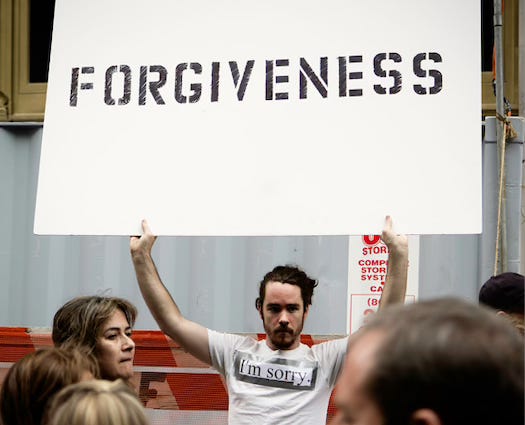
As we enter the season of Advent and begin the focus towards Christmas my heart becomes full of dread. With both my parents now deceased I am so aware of the difficulty of my broken remaining family relationship. This is a reflection then on the importance of choosing to forgive and the pain of feeling unforgiven which is very real in my life.
At times I have been no angel in my life. Through pain and unworked out inner stuff I have hurt family and friends. I’ve done a lot of inner work now and the contemplative path continues to be a healing process of encounter with God. However, there is a sorrow that eats at the soul when our mistakes or misunderstandings wound someone we care about. Recently I offended the partner of a good friend whose pain I did not intend, though I caused it. Compounded by the ongoing pain of a hard relationship with my only remaining immediate genetic family member - who has carried and remembers every fault of mine from childhood into adulthood and beyond. The ache of feeling judged and unforgiven twists deep within: shame, regret, longing for reconciliation, and sometimes a hollow sense of isolation. When the other refuses to pardon, or when wounds are refused the gentleness of mercy, the pain lingers, the grief deepens. It becomes as though one’s spirit is held captive by anger, bitterness, or silence. In that captivity, one can begin to sense something larger at work - not merely broken relationships, but a fracture in the way we imagine being human together. As scholar Walter Wink warned, such fractures feed the destructive powers of the domination system, the structural impulse to treat human beings dispassionately even as disposable, as means rather than ends. Forgiveness, then, is not just a personal nicety - it is a spiritual discipline that resists that system by restoring dignity, connection, and hope.
To forgive - even when there is no apology, no repentance, no reconciliation - is to open a window in a suffocating room of memory and resentment. As Archbishop Desmond Tutu reminds us, “when we see others as the enemy, we risk becoming what we hate.”1 Forgiveness does not mean forgetting, nor does it mean condoning evil or dismissing pain. It means, in the words of Tutu, “taking seriously the awfulness of what has happened… drawing out the sting in the memory that threatens our entire existence.”2 It means refusing to let the wounds define our future or imprison our capacity for compassion. And in doing so, it begins the slow work of healing broken parts - not only within us, but across relational and societal divides.
The spiritual power of forgiveness becomes clear when we remember the teaching of Jesus. When asked by his disciple how many times he should forgive a brother who sins against him, Peter suggests “up to seven times.” Jesus answers, not simply “seven,” but “seventy times seven.”3 He is not giving a ledger for offences and pardons, but proclaiming a posture of boundless pardon - unlimited, uncounted, ongoing. It is a call to see one another not through a ledger of debts and wrongs, but through a horizon of grace. Forgiveness is not a transaction. It is the form in which love lives when love refuses to be limited by what we have done or what has been done to us.
From a contemplative perspective, forgiveness is cultivated in the silence of prayer, in the honest naming of hurt, and in the surrender of our demand for retribution. It blossoms when we allow God’s mercy to reshape our memory so that we no longer cling to wrongs as claims, but release them as burdens. In that release, we reclaim our humanity - and the humanity of those who harmed us. We affirm that the person in front of us is not defined by their worst act, nor are we defined by theirs. We recognise that we are bound together in a fragile network of interdependence. As Tutu put it, “We are sisters and brothers, whether we like it or not.”4
When we forgive, even in the absence of apology, we choose hope - hope that the spirit of love and transformation can still move, that what was broken is not irreparably lost, that relationships can be reconfigured in compassion, empathy, and truth. Forgiveness becomes a prophetic act, resisting the logic of the domination system that thrives on memory of pain, cycles of revenge, and the commodification of human beings. It refuses the lie that our value depends on perfection, performance, innocence, or unbroken trust. It affirms that even wounded people remain beloved children of God, worthy of dignity, belonging, and new beginnings.
In an Anglican Church I was once a Rector of in South London, there was a very proud yet economically poor community, where the pride meant that some relationships between adult men and women where mistakes or conflict had occurred had resulted in a situation of no forgiveness and lacking repentance between quite a few people. Some of the pain of these breakdowns had gone on for over 20 years! So I set up mini truth and reconciliation processes where I would get people together 1:1 and go through a process beginning and ending in prayer - and the relief and release of pain on both sides was so obvious and yet even Christians hold resentments and unforgiveness even when Jesus’ teachings are pretty clear. There is something incredibly powerful when people choose to forgive and healing begins.
But the power of forgiveness goes beyond individual relationships. When entire societies practice the discipline of forgiveness, when communities say together: “We will not allow hate to define us, we will not let injustice harden our hearts,” then forgiveness becomes a force for healing collective wounds. As Tutu observed in the work of the Truth and Reconciliation Commission in South Africa, “without forgiveness, there is no future.”5 The Commission did not ask people to forget. It asked them to speak truth, to remember honestly, and then to choose mercy - to risk reconciliation by acknowledging pain and refusing the cycle of retaliation. In so doing, it offered a model for post-conflict healing that begins not with punishment, but with vulnerability, confession, and the possibility of compassion.
In Advent, as we wait for the coming of Christ, there is a special power in practising the discipline of forgiveness. Advent is a season of hope, longing, and penitence. It invites us to open the windows of our heart - even the painful parts, the regrets, the severed relationships, the lingering wounds - and let God’s light in. To pray for those we have offended, to forgive those who have wounded us, to do so without guarantee of restitution or reconciliation. To trust that God’s grace can move even when human hearts remain closed. To believe that love is stronger than shame, mercy deeper than fear, and compassion more enduring than anger.
Most of all, forgiveness as prayer teaches us that holiness is not separate from brokenness. It is forged in the fragments of our lives, in the tangled webs of regret and longing, of fear and memory. Forgiveness does not erase history; it redeems it. It does not pretend that pain never occurred; it transforms it. It does not insist on justice as seen by human judgments alone; it entrusts the final reckoning to God, while calling us to love now.
In forgiving, we set a wounded heart free. We loosen the chains of anger that bind us, the bitterness that distorts our vision. We allow ourselves to be human again — vulnerable, fragile, open, capable of compassion, capable of hope. And in doing so, we participate in the slow and holy work of restoring right relationship with God, with others, and with creation itself.
Let this Advent be a time not only of waiting for a child born in an obscure stable, but a time of freeing ourselves and one another through the discipline of forgiveness. Let us believe that even in our brokenness, God can make us streams of mercy for a thirsty world. Let us trust that the Kingdom we await is one where no debt remains, no wound is final, no person is disposable - a kingdom where love, not fear or vengeance, defines what it means to be human. I hope one day my own family member will choose to forgive me - but this is not in my gift, and it truly breaks my heart every time I remember it with sadness.
Contemplative Practices when you feel unforgiven
1. The Prayer of Holding (Julian of Norwich–inspired)
Purpose: To rest in God when shame or regret feels overwhelming.
Practice:
Sit quietly and place your hands gently over your heart.
Imagine yourself being held in God’s compassionate gaze — not judged, not condemned, simply held.
Whisper slowly:
“All shall be well, and all shall be well, and all manner of thing shall be well.”Let the words become an anchor.
When the feeling of being unforgiven rises, don’t fight it; offer it simply into God’s hands.
This practice helps you remember that God’s forgiveness is not conditional on other people’s responses.
2. Breath Prayer of Release
Purpose: To soothe the shame-body and nervous system when the pain of not being forgiven becomes sharp.
Practice:
Inhale gently and pray: “Receive me, O God…”
Exhale and pray: “…and release what I cannot carry.”
Continue this for 5–10 minutes.
Each time your mind returns to the wound, imagine placing it on your exhale into God’s compassionate presence.
This does not erase the hurt, but it invites God into the emotions so they do not harden into self-hatred.
3. Contemplative Reflection with Jesus
Purpose: To place your wounded relationship within the story of Christ’s mercy.
Practice:
Sit before a candle or icon (or simply close your eyes).
Gently imagine Jesus looking at you — not with disappointment, but with sorrow for your pain and love for your desire to repair what is broken.
In that quiet gaze, allow yourself to say:
“Jesus, you know the truth. Heal what I cannot fix.”Imagine him placing a hand on your shoulder — steady, kind, unhurried — and simply stay there.
This anchors your identity in Christ’s mercy rather than in another person’s unresolved anger.
4. The Practice of Compassionate Self-Examination
Purpose: To distinguish healthy remorse from unhealthy shame.
Practice:
Sit with a journal in silence.
Ask God gently:
“What part of this is mine to learn from, and what part is not mine to carry?”Write whatever arises without judging it.
Offer both the learning and the confusion to God with the simple prayer:
“Make me more whole, not more afraid.”
This practice turns regret into wisdom rather than into self-condemnation.
5. Intercessory Forgiveness Prayer
Purpose: To soften your heart toward yourself and the other person, even when reconciliation has not yet come.
Practice:
Picture the person who has not forgiven you.
Without forcing any emotion, pray slowly:
“May they be held in love.
May I be held in love.
May the truth be revealed in gentleness.
May peace one day arise between us.”Release them, not pushing for resolution — simply allowing God to be present.
This prayer prevents the wound from becoming a hardened scar by keeping compassion alive.
Contemplative Practices when you find it hard to forgive
1. The Holding-Bowl Prayer
Purpose: To symbolically “hold” the hurt before God without having to resolve it.
Practice:
Sit quietly with a small empty bowl or cup in your hands.
Imagine placing the situation, the person, the wound into the bowl—not to fix it, but simply to acknowledge its weight.
Pray silently: “God, hold what I cannot hold alone.”
Sit for 5–10 minutes, letting the bowl represent God’s container for what feels too much.
End by gently placing the bowl on a table, symbolising handing the burden to God.
2. The Breath of Mercy Practice
Purpose: To soften the heart without forcing forgiveness.
Practice:
Sit upright and breathe slowly.
On the inhale, pray: “Holy Spirit, fill me with Your peace.”
On the exhale, pray: “Soften what is hardened in me.”
You are not thinking about the person directly—only letting God work in the inner terrain.
Continue for 10 minutes.
Conclude with: “God, make in me a heart spacious enough for healing.”
3. The Two-Chair Contemplation (Held in God’s Presence)
Purpose: To see the situation with more clarity and less emotional pressure.
Practice:
Place two chairs in the room: one for you, one symbolising the other person.
Sit in your chair, close your eyes, and imagine Christ sitting between the two chairs.
Allow yourself to express silently (or softly aloud) what hurts.
Then sit in silence for several minutes imagining Christ simply holding the space.
You do not switch chairs or imagine being the other person — this is not psychodrama.
This is a contemplative way of saying: “Christ, stand between us because I cannot.”
4. The Prayer of Radical Honesty
Purpose: To bring unfiltered truth to God, knowing God can hold it.
Practice:
Light a candle.
Sit before it and name—quietly, slowly—the real emotions: anger, sadness, disappointment, betrayal.
After each naming, pause for 15–20 seconds of silence.
Let God receive everything without judgement.
Conclude with: “God, keep my heart open enough not to be ruled by resentment.”
Allow the candle to burn for a few moments as a symbol of divine presence in the mess.
5. The Walking Release Meditation
Purpose: To release tension from the body when emotional pain is stuck.
Practice:
Take a slow walk in a quiet place.
With each step, silently pray: “Here… I am.”
After a couple of minutes, shift to: “Here… is my pain.”
After another few minutes: “Here… is God with me.”
Do not think about the person or the incident; just walk with God in your pain.
End by stopping, placing a hand on your chest, and praying: “Lead me toward freedom, in Your time.”
https://internationalforgiveness.com/2013/10/08/quotations-on-forgiveness-from-desmond-tutu-honorary-board-member-of-the-international-forgiveness-institute/
https://www.churchsp.org/nofuturewithoutforgiveness/
https://biblehub.com/matthew/18-22.htm
https://www.thenationalnews.com/arts-culture/books/2021/12/26/a-look-back-at-desmond-tutus-greatest-quotes-from-kindness-to-forgiveness/
https://www.betterworld.net/heroes/pages-t/tutu-quotes.htm
Photo by Felix Koutchinski on Unsplash
I love that as a Rector you sat down with people and helped them to work through their problems together. I wish it were more commonplace. If only it were routine that when we fall out with believers we work through forgiving each other.
Thank you, Ian, for sharing so honestly about your inner life. I can relate to lot of what you say although there are differences, of course. Out of 4 remaining biological family members, I keep in touch with only one. What has helped me was to have clarity about what kind of relationships I want to have, which is one of open, honest, and respectful communication. I do not experience any emotional pain because I know that as soon as these three criteria are met, I know I am ready to embrace my estranged family members, and I have made that known to them. For me this clarity on relationship boundary has kept me from the pain and destructiveness of unforgiveness in my heart. The situation is still very sad, but I do not carry or feel the pain or tyranny of sadness, anger, or bitterness.
What is amazing to me is how difficult it is for people to learn about and put into practice basic relationship “skills” such as respect, thoughtfulness, courtesy, honesty, openness, courage, vulnerability to talk about feelings, etc.
I realized that in the first half of our lives we were given our biological families without our input, but in the second half of our lives we have choices about who and how we want to connect, communicate, and build community with (our “intentional family” whether it be with our spouses and kids, friends, spiritual community, etc).
I am so thankful that my old self has died and is buried with Jesus (even though the false self residue lingers on) so that my new self can live in the newness of life offered to me. For me this is the gift of wisdom of the second half of life.
May the peace of our Lord God be with you this holiday season, Ian. You are loved by God.