
One Thing Needed: Holding Prayer & Action Together in the Story of Mary & Martha
A Contemplative Reflection on Action and Contemplation drawing on the Lectionary Reading of Luke 10:38–42 for the Sixth Sunday after Pentecost or 5th Sunday of Trinity in Ordinary Time.

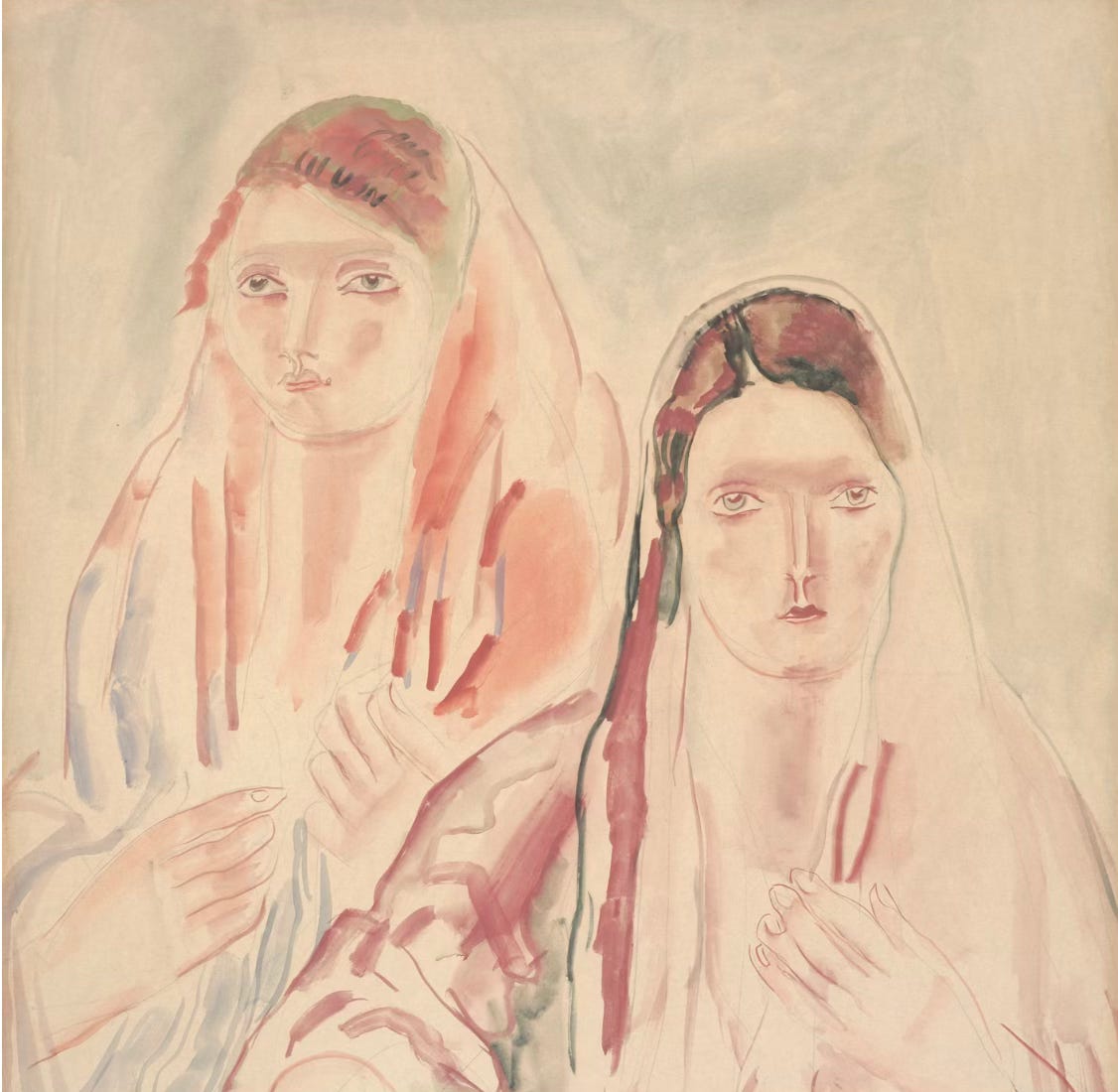
There is a moment in Luke’s Gospel that has puzzled and even troubled Christians for generations. Jesus visits the home of two sisters, Martha and Mary. Martha is busy, preparing and serving. Mary sits at Jesus’ feet, listening. When Martha asks Jesus to intervene and tell Mary to help, he replies: “Martha, Martha, you are worried and distracted by many things; there is need of only one thing. Mary has chosen the better part, which will not be taken away from her.” (Luke 10:41–42)
Too often, this passage has been interpreted in a way that draws a sharp line between action and contemplation - between activism (bad) and prayer (good) - as if the Christian life must be one or the other. Martha becomes the symbol of busy, worldly striving, and Mary the icon of spiritual stillness. But this reading sets up a false dualistic dichotomy. It misses the deeper invitation Jesus offers to all who follow him: not to abandon service for silence, nor to drown out prayer in busyness, but to let contemplation and action flow together in a loving spiritual cycle.
The Gospel does not condemn Martha’s activity. It simply reveals her anxiety. Jesus says she is “worried and distracted” - the Greek words here suggest she is being pulled apart, divided within herself. The problem is not that she is serving; it is that her service is not grounded in presence. She has allowed the work to consume her, to pull her attention away from the Guest who is God who is already in her midst. The issue is not the doing, but the disconnection.
Mary, on the other hand, has found the still point. She is not passive, but deeply receptive. To sit at the feet of a rabbi was the posture of a disciple. Mary chooses to learn, to listen, to be shaped by the presence of Jesus and him speaking to them. Her act is revolutionary, especially for a woman in her cultural context. She steps beyond what is expected and chooses intimacy with the divine over the safety of role and task. Mary does not reject work - she simply chooses to begin from presence rather than pressure.
This moment is not a rejection of Martha, but a calling forth. Jesus is gently inviting her back to herself, back to the “one thing” that truly matters. That “one thing” is not a fixed contemplative state. It is not a rejection of cooking or serving. It is the grounding of all action in love and attention. “Abide in me as I abide in you,” says Jesus elsewhere (John 15:4). This is the heart of Christian discipleship - not just doing things for Jesus, but doing things with him, in him, through him.
There are many Marthas among us - those who care for others, who hold families and communities together, who labour quietly and faithfully. The Church itself would collapse without its Marthas. But when we serve from anxiety rather than union and presence, from performance rather than presence, the soul frays and faith then is driven by our egoic energy, not in the received love of God. The invitation to Martha is not to stop serving, but to let her service be a fruit of her being. As Paul writes, “If I give away all my possessions... but do not have love, I gain nothing.” (1 Corinthians 13:3)
In truth, Mary and Martha are not in competition. They are expressing two dimensions of Christian spirituality and Christian discipleship, two expressions of one love. The Christian life is not a choice between listening and serving, but a continual movement between the two. Jesus himself modeled this rhythm. He withdrew to deserted places to pray (Luke 5:16), but he also touched the leper, fed the crowds, wept at gravesides, and overturned tables. His action was contemplative. His contemplation was active. The whole life of Jesus flowed from the intimacy he shared with God the Creator or Father.
This is what we are called to - to a life that integrates prayer and compassion, silence and solidarity, listening and labour. Contemplation without action becomes detachment. Action without contemplation becomes noise. But contemplation that births action, and action that returns to contemplation—this is the path of transformation.
Jesus does not shame Martha. He does not scold her for being busy. He names her pain. “You are anxious and troubled.” He sees her, as he sees us when we are overwhelmed. And he invites her into something deeper - not to abandon her work, but to reorient it in love.
Perhaps the real question this story asks is not, “Are you a Martha or a Mary?” but “What is the source of your service? What is the ground of your being?” If we begin in silence, in attention, in love, then whatever we do - whether washing dishes or preaching sermons - can become an offering of the heart.
Jesus says Mary has chosen the “better part,” and it will not be taken from her. That “better part” is not a judgment against work but a reminder of what comes first. Being with God. Listening. Allowing our souls to rest. From there, we rise and serve - not because we must, but because love moves us. We feed others because we have been fed. We pour out because we have been filled.
In a world of constant motion, this story calls us to stillness. In a culture of doing, it invites us to being. And in the weariness of our divided hearts, it speaks gently the words we most need to hear: “You are worried and distracted by many things. There is need of only one thing.”
Let us listen. Let us serve. Let us do both with love.
Photo by Museum of New Zealand Te Papa Tongarewa on Unsplash
This is a much-needed reframing. The Mary–Martha story isn’t a tale of spiritual favoritism—it’s an invitation to coherence.
Jesus didn’t tell Martha to stop cooking. He told her to stop splitting. The issue wasn’t her hands, it was her divided heart.
Mary chose the “better part” not because she rejected action, but because she started from presence. She let love be the root, not the reward.
In a world addicted to outcomes, this is resistance. To serve from stillness, not instead of it. To let the doing flow from the being.
Thank you for restoring the sacred rhythm.
Absolutely, Ian - brilliant interpretation of this scriptural story. Intimacy with the divine is what drives our action, gives it meaning, and grounds us against worry, anxiety, and defensiveness. This intimacy must be the starting place for our days. 🙏🏼