
I Will Not Leave You Orphaned, The Indwelling Love that Breathes Resurrection into Us: A Contemplative Reflection of John 14:15-21 for the Sixth Sunday of Easter
A personal contemplative response by Ian J Mobsby

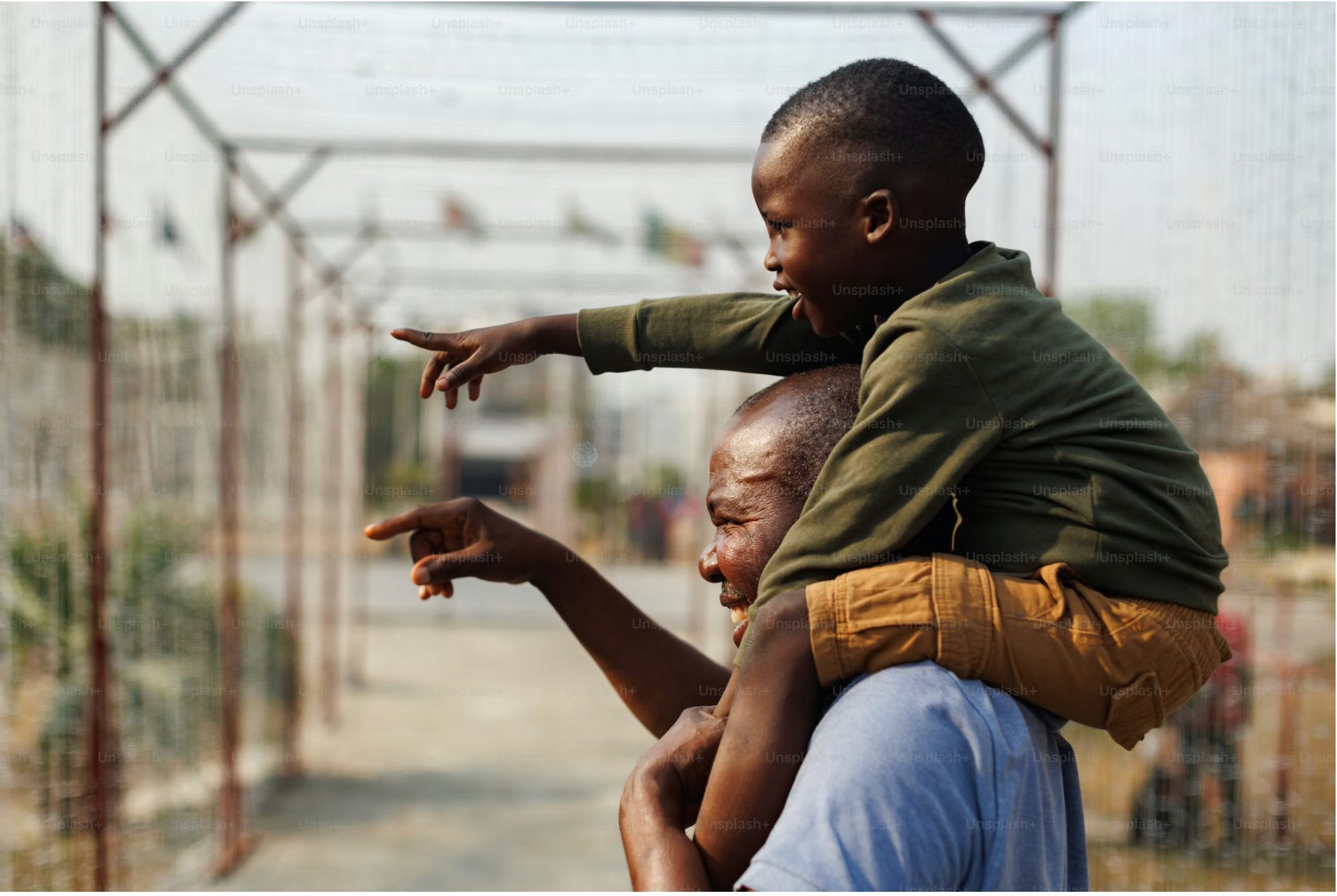
Image by Ben Iwara on UnSplash
As we continue to explore the Gospel of John in this Season of Easter and the resurrection of Jesus, the language becomes increasingly symbolic and trans-rational, as language begins to strain under the weight of mystery. Words become less like explanations and more like doorways. John 14:15–21 is one of those places. It is spoken in the charged air of farewell, yet it is saturated with the strange life of Easter—where absence is not absence, and death is not the final word.
[This is poignant for all those like me that carry the grief of loss and accompanying loneliness. I lost both my parents and 2 close friends in the last 2 years, and another close friend in January 2026. This sense of being alone, of being effectively orphaned is common for many of us who are getting older, where the older generation are passing, and friends who have traveled with us are passing due to serious disease or in one case death from brain injury as a result of a sexual assault. These people are in me, and I miss them all terribly.]
So Jesus says:
“If you love me, you will keep my commandments. And I will ask the Father, and he will give you another Advocate, to be with you forever.”
The Greek here is already resonating with depth. “Love” is not eros, not sentiment, but (agapē) - a love that is not driven by desire but by self-giving communion. And “keep” is (tēreō), not a mechanical obedience but a contemplative holding, a guarding, a treasuring. It is the same word used for Mary “treasuring all these things in her heart.” To keep the commandments of Christ is not first about rule-keeping but about interior abiding, a re-membering that becomes indwelling.
And then Jesus says something astonishing: “I will ask the Father, and he will give you another Paraclete.”
The word (paraklētos) is almost impossible to translate. Advocate, Comforter, Helper - each captures something, but none exhaust it. It is literally “the one called alongside,” the one who stands with, speaks for, breathes within. In Roman legal imagery it is a defence attorney. In spiritual experience it is the One who does not stand outside us offering advice, but enters into the very centre of our vulnerability and speaks life from within.
This is already resurrection theology before the cross has even happened. Because what Jesus is describing is not absence followed by compensation, but presence transformed. “I will not leave you orphaned” - (ouk aphēsō hymas orphanous). The word “orphans” is devastatingly intimate. It is not simply loneliness; it is disconnection from source, from belonging, from identity. Jesus is not promising emotional comfort. He is promising ontological belonging: you will not be without a home in Being itself.
[I have to confess at this point I unexpectedly cried a lot at this point, orphanous is exactly how I feel, and so these words touch me deeply]
Then comes the line that quietly detonates the imagination:
“On that day you will know that I am in my Father, and you in me, and I in you.”
Here John’s Gospel begins to spiral into its deepest contemplative truth: mutual indwelling. The Greek verb μένω (menō) - to remain, to abide, to dwell - is everywhere in the background of this passage. It is the same word used in John 15: “Abide in me as I abide in you.” But here it is not instruction yet; it is revelation: this is what reality actually is.
The risen life is not an external event added to history. It is the unveiling of a deep transformative relationship between God and people that was always already true but hidden from perception.
In Easter terms, resurrection is not simply Jesus coming back to life. It is the disclosure that life itself is more porous than death ever imagined.
“You will see me,” Jesus says. And then: “Because I live, you also will live.”
Not “you will be resurrected later,” but “you will participate now.” The verb is present and continuous. ζωή (zōē) here is not biological survival but divine life - life that is not self-generated but received, shared, circulated like breath.
And breath is not a metaphor here. It is the Spirit.
The Paraclete is not an abstract comforter but the very pneuma (πνεῦμα) of God - the breath that hovered over the waters at creation, the breath that entered Adam’s dust, the breath that Jesus “hands over” on the cross in John’s Gospel as he dies.
So what is being said in this passage is almost unbearable in its intimacy: the same breath that raised Jesus from death will inhabit you.
Easter, then, is not merely about Jesus being alive again somewhere else. It is about the collapse of distance between divine life and human life. The veil between “God” and “us” becomes permeable, not in a vague mystical sense, but in a concrete relational reality: “I am in you.”
This is why Jesus can say, “If you love me, you will keep my commandments,” without it becoming moral pressure. Because the commandments are not external demands but the shape love takes when it becomes embodied. The risen Christ does not ask for imitation from afar but participation from within.
Contemplatively, this passage begins to undo the deepest illusion of spiritual life: that God is somewhere else.
“I will come to you,” Jesus says.
Let us in this moment just take in how incredible this sentence is. Not later. Not only at the end of time. But in the very place where you feel most abandoned, most fragmented, most unsure of where love is.
There is a kind of spiritual resurrection that happens when this begins to be trusted - not as idea, but as lived experience. It is the slow awakening that you are not being addressed from a distance but inhabited from within.
The mystics knew this. Julian of Norwich would later speak of God as both the ground of our being and the depth of our longing. John of the Cross would speak of the dark night not as absence of God but as the purification of our ability to recognise presence. And here, in John 14, we are already given the seed of that vision: you will not be left alone because love does not leave its own outside itself.
There is a tenderness in this passage that is almost unbearable when truly received. “I will not leave you orphaned.” It is spoken by one who knows the fear of abandonment that lives in the human heart, and yet refuses to let that fear define the final word.
In contemplative practice, this becomes less a doctrine and more a return. A return again and again to the quiet centre where the Paraclete is not an idea but a presence, where breath itself becomes prayer, where the simple act of remaining - (menein) - becomes the deepest form of faith.
To abide is not to achieve stillness. It is to discover that you are already held.
And this is why Easter cannot be contained in a single moment in history. It keeps happening wherever the orphaned discover they are not alone, wherever fear loosens its grip long enough for love to be recognised, wherever the breath of God is felt not as external intervention but as intimate life.
“I will not leave you orphaned. I am coming to you.”
Not as future promise only. But as present reality slowly waking us up.
This is the resurrection life: not escape from the world, but the discovery that the world is already being held from within by a love that does not withdraw, a breath that does not cease, and a presence that speaks silently in the deepest place of the heart:
You are not alone. You never were.
This. Brilliant and soul-filling. Having felt alone and at loose ends most of my life, still not having 'found my tribe' yet, this is the best possible thing I could have found today. Thank you. 🤗