
God With Us: Finding Hope in the Vulnerability of the Incarnation
Leaning into incarnational theology and resisting Christendom

For those who are struggling, hurting, or feeling alone this Christmas as I am, the opening words of John’s Gospel are more than just theology—they are a lifeline of hope.
“In the beginning was the Word, and the Word was with God, and the Word was God… The Word became flesh and dwelt among us.”
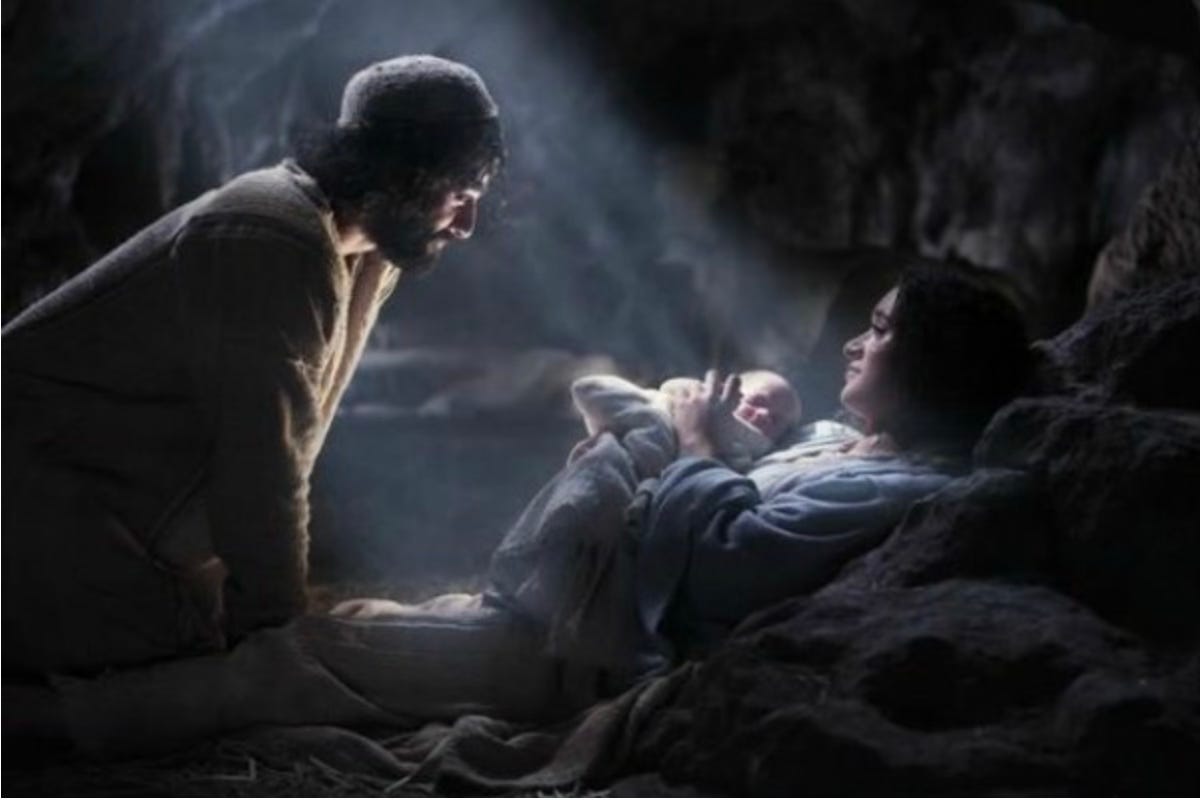
These words aren’t just about a faraway God orchestrating salvation from a distance. They are about God stepping into our pain, our loneliness, and our humanity. God didn’t send a prince or a king in fine robes to remind us of His greatness. Instead, He became a vulnerable child—fully immersed in the messiness of human life.
A Vulnerable God for a Broken World
Think about it: God could have come with fanfare, legions of angels, and unapproachable majesty. But instead, He entered the world in obscurity, born into a poor family in a stable. Jesus didn’t come to lord over us with power but to share life with us in its rawest form.
For anyone who feels small, unnoticed, or unworthy, or voiceless like I constantly do, the incarnation says this: God sees you. God doesn’t just love you from afar; God joins you where you are.
Jesus grew up in an occupied land, under Roman rule, with all its injustice and suffering. He experienced hunger, rejection, grief, and even betrayal. He knows what it’s like to weep at the graveside of a friend and to feel abandoned by those He loved. This is Emmanuel—God with us—not as a distant ruler, but as someone who understands the depths of human pain and suffering.
Why We Need a New Language for God’s Kingdom
For centuries, the church has often described Jesus as a king or prince, with royal titles that emphasise power and majesty. While these titles are biblical, they can sometimes feel disconnected and irrelevant from the reality of a struggling world. After all, what good is a king if you’re alone on Christmas morning, or grieving the loss of someone you love, or wondering how you’ll make it to the next day?
The language of Christendom—kings, crowns, dominion—can feel heavy and distant, but the incarnation of the Messiah points to a different kind of God. Jesus’ kingdom is not about thrones or armies; it’s about presence. It’s about God pitching God’s tent among us, entering into our struggles, and walking alongside us in the dirt and heartbreak of life.
When we cling too tightly to images of Christ as a distant ruler, we risk missing the miracle of His vulnerability and presence. God didn’t come to dominate us but to love us—to share in our humanity so deeply that we could never again doubt His nearness.
God With Us in Our Humanity
The incarnation tells us something extraordinary: that our humanity—our frailty, our vulnerability—is not something to escape but something Jesus Himself embraced. Jesus wasn’t ashamed of our weakness. Instead, He stepped into it fully.
This matters profoundly for those who feel the weight of brokenness this Christmas. If you’re grieving like me, Jesus knows grief. If you’re lonely, He has been abandoned. If you’re struggling to make sense of life, He walked those same roads of doubt and pain.
God didn’t come to remove the God-self from human experience but to redeem it. The Word became flesh so that even in our darkest moments, we could know: we are not alone.
Finding Hope This Christmas
If this Christmas finds you feeling lost, overlooked, or struggling to hold onto hope, the incarnation offers a promise: God is with you and me. Not as a king in a palace but as a Saviour who knows what it’s like to hurt.
This isn’t a distant theology; it’s the heartbeat of the Gospel. The God who created the universe stepped into time and space to join us in the chaos and brokenness of our world. Jesus became flesh so that He could meet us right where we are—not where we think we should be.
When John writes that “the light shines in the darkness, and the darkness has not overcome it,” it’s not just a poetic phrase. It’s a reminder that no matter how deep the darkness feels, the light of God’s love is still shining. And it shines not from a throne but from a manger, from a cross, and from the empty tomb.
A Call to Embrace the Vulnerable God
This Christmas, I want to suggest that it would be good if we set aside images of power and prestige and instead embrace the God who comes to us in vulnerability. The incarnation isn’t about God’s dominance; it’s about God’s nearness.
Jesus didn’t come to fix us from a distance but to join us in the mess, the heartache, and the struggle. He came to show us that even in our pain, we are loved. Even in our loneliness, we are not alone.
So, if you’re struggling this Christmas, know this: God is with you us - you and me. In Jesus, the Word became flesh—not to rule over you but to walk beside you. And in His light, you can find hope, even in the darkest moments.
This is the miracle of the Christ Mass: not a king in power but a God in the flesh, reaching out to you in love. Emmanuel. God with us. God with you. God with me. Amen.